
In the dynamic landscape of modern architecture, where soaring structures define city skylines, ensuring the safety of occupants during a fire emergency is vital. Among the various fire safety measures, pressurisation systems, also known as pressure differential systems, stand out as critical components that play a crucial role in maintaining clear evacuation routes and protecting lives in high-rise buildings.
At G.S Stothers Smoke Ventilation Specialists, we recognise the significance of pressurisation systems in enhancing fire safety. Let's delve deeper into how these systems work and outline key practices that contribute to their effectiveness.
What is a Pressurisation System?
A pressurisation system, also referred to as a pressure differential system, is designed to remove smoke from a building, specifically from areas critical for safe evacuation, such as stairwells. The fundamental mechanism involves the supply of air into the stairwell using dedicated fans. This creates positive pressure within the stairwell, preventing the ingress of smoke during a fire emergency. An accommodation air relief mechanism, often utilising natural smoke and heat ventilators or mechanical extract systems, allows controlled air movement from protected areas to unprotected spaces.
Understanding the Mechanics of Pressurisation Systems:
Pressurisation systems operate on a simple yet effective principle. Air is supplied into stairwells through dedicated fans, creating a positive pressure environment within these vertical escape routes. This positive pressure prevents smoke from infiltrating the stairwells, ensuring that they remain clear and safe for occupants to use during a fire emergency.
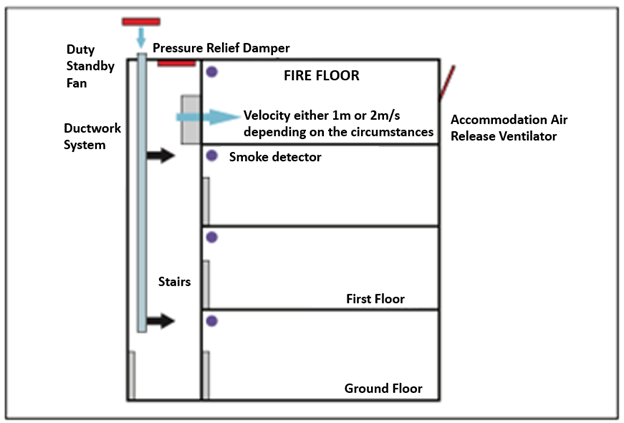
This diagram from COLT UK illustrates the essential components of a pressurisation system. Compliance with standards, particularly BS EN 12101-13 part 6, ensures that the system meets specific pressures and velocities based on the building's purpose. To facilitate the controlled movement of air from protected areas like stairwells to unprotected spaces, an accommodation air relief mechanism is incorporated. This could involve natural smoke and heat ventilators or mechanical extract systems strategically placed to release air without compromising the protective positive pressure.
In conclusion, a well-designed and properly implemented pressurisation system is a linchpin in high-rise building safety. As specialists in smoke ventilation systems, G.S Stothers is committed to delivering cutting-edge solutions that prioritise fire safety. Our expertise ensures compliance with the latest standards, and our commitment to excellence is reflected in our ability to tailor solutions to the unique requirements of each project. When it comes to fire safety, trust in G.S Stothers for reliable and effective pressurisation systems.